Showing posts with label travel. Show all posts

Some Weird Temples In India, Dedicated To The So Called 'Super Villains'!

You have seen devotees of lord rama to lord Krishna to lord shiva who are the most worshipped and known gods in hinduism, but there are some unusual gods that are also worshipped in our country. Their temples are unique and so are the devotees. There are people who worship from Gandhari to even Shakuni to even Ravana! 

A lot of the temples that we are talking about are situated in south India and central India. Here’s the list of the most unique temples with the most unusual gods!
 Ravana’s Temple


Situated near Kakinanda in Andhra Pradesh, this temple is dedicated to Ravana. A lot of devotees come to worship Ravana in this temple. Although this is not the first temple of Ravana, a lot of temples are dedicated to Ravana are there in India. A lot of Dev Brahmins consider ravana as their ancestors. 

Shakuni’s Temple


This temple is quite near to duryodhan’s temple. Even though shakuni was considered as a very negative person, but according to sanatan dharma, shakuni had some positive things in him too. There is a stone in the temple which is believed to be used by shakuni himself. 

Duryodhan’s Temple


The temple’s name is ‘Malanada’ it is situated in kolam, kerela. Duryodhan is worshipped in the temple. Devotees give red cloth and supari as offerings.


Gandhari’s Temple


This mysore situated temple is dedicated to Gandhari, the mother of kauravs. The temple was built in 2008, and a whopping amount of 2.5 crore were spent in the making of the temple.

Karan’s Temple


The temple dedicated to karan is situated in devra, uttrakhand. A lot of people visit the temple when their wishes come true. Even though karan was also called ‘dan veer’, karan has been interpreted as a negative personality. 


The Unique Krishna Idol In This Temple Still Has Scars On It!


This is the story of ‘Ranchhodraiji dakor temple’ situated in kheda district near Dakora, Gujrat. The history behind the temple is that the temple is dedicated to lord Krishna’s other heavenly form Lord Ranchor , when he fled from the battlefield in Mathura while fighting against Jarasandha. The deity is of Lord Vishnu with four arms bearing the conch, lotus, discus and mace. The lower right arm is in abhaya mudra to denote protection. It is said that the idol sitting in the temple was stolen from Dwarkadhish temple. The idol is made up of black stone. And is as mesmerizing as it Lord Krishna!


The story behind this deity having scars is a blast from the past. A man named from dakor named Bodana, who was a great devotee of Lord Ranchod, used to plant Tulsi trees himself. Every year twice he used to go to Dwarkadhish temple to offer the Tulsi to Lord Ranchod. He did it for ‘n’ number of years when one day he stopped. He became old and sick and was unable to do so. He was unable to walk, and hence could not travel further. One night when he was sleeping he dreamt of Lord Ranchod, who gave him permission to move the idol from Dwarka to Dakor in his dream. Baje singh went to Dwarkadhish’s garbagraha and took the idol. After that he established the idol in the Dakor temple.


In the morning, when the gates of Dwarkadhish temple were opened and there was no idol to be found everybody panicked and started searching for the idol. When Baje Singh got to know he panicked and hid the idol in a lake. When the search team reached the lake, they used spears to check whether the idol was there or not. Is is said that it hit the idol so badly that it still has a scar on it!


It is also believed that when the spears hit the idol, the gomti tank’s water turned red because of krishna’s blood. Even till today, the gomti tank is somewhat reddish. When Bodana was stealing the idol, he was rested under a neem tree at a place near dakor named Bileshwar Mahadev. It is also believed that the neem tree inside the temple was touched by the lord and the branch that was touched is sweet and the rest of them are bitter.


Well, stolen or not the temple complex is a beautiful complex and is one of the most beautiful temples of Gujrat. But so much for the love of god!


Wildlife in Maharashtra

Maharashtra is home to many wildlife sanctuaries and national parks. These national parks and sanctuaries are home to many rare species of flora and fauna. 

Modern amenities such as jeep rides, night safaris, library and audio-visual facilities, comfortable accommodation and efficient transport are also available at these parks at a nominal charge. Most of the sanctuaries and the park have lakes with serene beauty.

Chaprala Wildlife Sanctuary, Tadoba National Park, Chikhaldhara, Dajipur, Bharmragarh Wild Life Sanctuary, Navegaon National Park, Tipeshwer, Bor Wildlife Sanctuary are the important sanctuaries in Maharashtra. Pench Jungle camp is a special accommodation facility available at the Pench National Park, which is located on the border of Maharashtra and Madhya Pradesh.

Bhamragarh Sanctuary


Bhamragarh Wildlife Sanctuary has many types of wild animals like leopard, jungle fowl, wild boar and sloth bear, barking deer, blue bull, peacock and flying squirrel. The entire area is covered with the moist deciduous mix forests.


Bor Wildlife Sanctuary


Bor Wildlife Sanctuary is located at Hingni in Wardha, Maharashtra. It covers an area of 61.10 sq km. It includes 3,237 hectares of Reserve Forest, 2,213 hectares of Protected Forest.

Chikhaldara


Chikhaldara is in Amaravati district of Vidarbha region of Maharashtra. It is believed that its name is derived from Keechaka. This hill station is the only hill station, which offers the tourists lots of wildlife.

Dajipur 


Dajipur is situated on the border of Kolhapur and Sindhudurg districts. Rugged mountains and dense forests surround this hilly area. This quiet little place is completely cut-off from human blare.


Chaprala Sanctuary


Chaprala Wildlife Sanctuary is home to nearly 131 species of wild animals like tiger, leopard, jungle cat, sloth bear and wild dog. Many of the species are included under the endangered species' list like two species of bird, two species of reptiles.


Nagzira


Adorned with a picturesque landscape and abundant vegetation, Nagzira Wildlife Sanctuary has 34 species of mammals, 166 species of birds, 36 species of reptiles and four species of amphibians.


Navegaon Park


Navegaon is a very popular forest resort in the Vidarbha region. This eastern most part of Maharashtra was built in the 18th century. There is also a picturesque lake that situates amidst the green hills of Navegaon.


Pench National Park


Pench National Park is located on the border of Madhya Pradesh and Maharashtra, which is at a distance of 70 km from Nagpur. The National Park covers an area of 257.26 sq km.


Tadoba National Park


Tadoba National Park is a large park covered with lush, green forestland.It is situated at a distance of 45 km from Chandrapur.


Tipeswher


Black buck, blue bull, chital, sambar, peacock, hare, snake, monkey, wild boar, bear, wild cat, wolf and jackal are the wild animals that are abundantly seen at the Tipeswher sanctuary.


Indian Birds on The Verge of Extinction


Avifauna of India includes around 1314 species of birds,which are endemic, introduced and accidentally occurs in India, unfortunately eighty-two species of Indian birds are globally threatened or locally extinction. Indian birds listed ascritically endangered are Indian Vultures,Forest Owlet, Indian Bustard, Bengal Florican and Himalayan Quail.

Indian Vulture


Indian vulture or Gyps indicus is one of the 9 species of vultures found living in India. This species of vulture breeds mainly on cliffs and trees of Rajasthan.


Indian Bustard


The Great Indian Bustard is one of the largest and heaviest flying bird found in India. Indian bustard is critically endangered by hunting and loss of its habitat


Bengal Florican


Bengal Florican is also called as Bengal bustard live in open tall grassland habitats in the Terai of Assam,Uttar Pradesh and Arunachal Pradesh. This bustard species is native to the Indian subcontinent and is the world’s rarest bustard.


Siberian Crane


Siberian Crane is a unique among all the other cranes species from Gruidae family and the third most endangered crane species in the world. These cranes feed mainly on plants and breeding area includes Nagpur and east to Bihar in India.


Spoon-Billed Sandpiper


Spoon-billed sandpiper is one of the small wader bird found in India,listed as critically endangered because of an extremely small population. It feeds off small insects and other invertebrates is sea coast are of India


Ajanta and Ellora Caves

Beginning with the 2nd century B.C., and continuing into the 6th century A.D., the paintings and sculptures in the caves of Ajanta and Ellora, inspired by Buddhism and its compassionate ethos, unleashed a surge of artistic excellence unmatched in human history. These Buddhist and Jain caves are ornately carved, yet seem quiet and meditative and exude a divine energy and power.
About 107 km from the city of Aurangabad in Maharashtra, are the rock-out caves of Ajanta nestled in a panoramic gorge, in the form of a gigantic horseshoe.

Ajanta Caves


A set of 29 caves, Ajanta is among the finest examples of some of the earliest Buddhist architecture, cave paintings and sculptures. These caves comprise Chaitya halls or shrines, dedicated to Lord Buddha and Viharas or monasteries, used by Buddhist monks for meditation and the study of Buddhist teachings. The paintings that adorn the walls and ceilings of the caves depict incidents from the life of lord Buddha and various Buddhist divinities. Among the most interesting paintings are the Jataka tales, illustrating diverse stories relating to the previous incarnations of the Buddha as Bodhisattava, a saintly being who is destined to become the Buddha. These elaborate sculptures and paintings stand in impressive grandeur in spite of withstanding the ravages of time. Amid the beautiful images and paintings are sculptures of Buddha, calm and serene in contemplation.


The cave temples and monasteries at Ellora, excavated out of the vertical face of an escarpment, are 26 km north of Aurangabad.


Ellora Caves


Sculptors, inspired by Buddhism, Jainism and Hinduism, created elaborate rock carvings. Extending in a linear arrangement, the 34 caves contain Buddhist Chaityas or halls of worship, Viharas or monasteries and Hindu and Jain temples. Spanning a period of about 600 years between the 5thand 11th century A.D., the earliest excavation here is of the Dhumar Lena (Cave 29). The most imposing excavation is, without doubt, that of the magnificent Kailasa Temple (Cave 16) which is the largest monolithic structure in the world. Known as Verul in ancient times, it has continuously attracted pilgrims through the centuries to the present 


Declared as World Heritage Sites by UNESCO since 1983, the paintings and sculptures of Ajanta and Ellora, considered masterpieces of Buddhist religious art, have had a great influence in the development of art in India. The creative use of colour and freedom of expression used in depicting human and animal forms makes the cave paintings at Ajanta one of the high watermarks of artistic creativity. The Ellora preserved as an artistic legacy that will continue to inspire and enrich the lives of generations to come. Not only is this cave complex a unique artistic creation and an excellent example of technological exploit but also, with its sanctuaries devoted to Buddhism, Hinduism and Jainism, it illustrates the spirit of tolerance that was characteristic of ancient India.

Best Road Side Food of India

The road side foods are specialty of Indian cities and reflection of India’s culture and tradition,stall vendors of street offers different kinds of delicious and tasty food such as famous Pani puri, various types of Chats and different fried items.  Some of major Indian cities are well famous for street food items like Delhi for chole bhature,Indore Poha jalebi, Mumbai for Vada Pao and Kolkata for all types of rolls.
Street foods are ready to eat food or drink generally sold in streets, public areas like a market,in fair by a hawker, vendor with a portable stall. Indian streets are well famous for its cheap and tasty food items, Every Indian city has its own specialty of all time favorite snack. The safety of street food has become one of the major concerns of public health, cleanliness and freshness are the concern to discourage people from eating street food.

Pani Puri: 


The must try road side Indian food is a mouth watering food item also known as Gol Gappa in Northern India and Poochkas in West Bengal. Pani Puri is best street food from India and the most favorite of Indian girls. Gup chup or Pani Puri is originated from Bihar the Magadh region of India and now available across every street of India. The most popular Indian street food is a small, round, crispy semolina shells stuffed with spice and potato and servers after digging into tangy water, The Water used for panipuri is mixed with Indian spices, amchoor powder and salt.

Other variants of Pani puri are Dahi puri and Sev Puri.

Bhelpuri: 


Bhelpuri or simple Bhel is a savoury snack item or kind of Chaat, made out of puffed rice, onion,potato and a tangy tamarind sauce. Major ingredients used to made Bhel are tomatoes, onions,chilis Sev,Chat masala and chutney. Type of chutneys is the responsible for the flavour like sweet,tangy or spicy. Bhelpuri is called Jhaal Muri in Kolkata, Churumuri in Bangalore and a dry version popularly known as Bhadang in Maharashtra. Jhaal Muri is a different snacks item sell by vendors around the street markets of city. The savoury Indian snacks is created from Maharashtra and got famous to rest of India.

Chaat: 


Chaat or Aloo tikki is another most famous Indian Street Food item available from every village to all Indian cities. Tasty evening snack item is originated from Uttar Pradesh state and become very popular in rest of India and the Indian Sub-continent. The most famous area for Chaat are Agra and Mathura, taste can be vary from city to city. Mumbai’s Chowpatty Beach is world famous for stalls different variety of chaats and other street foods.


Chaat is mostly served at road side stall or by vendors around, other variant of Chaat are Papri chaat,Aloo Chaat and Dahi Chaat.


Thattu Dosa: 


Thattu Dosa is the famous street food of south India especially in the state of Kerala and Tamil Nadu.Set Dosa or Saada Dosa is a pure vegetarian delicacy served with sambar and coconut chutney. Its a mouth watering dish made by traditional form of Kerala dosas and serve by street food sellers around the state. South India is known for its high standard food items, specially road side food and eaten on the streets. There more then 100 varieties of Dosas available in south India,other famous dishes from road side stall are Kerala’s famous banana fry and idlis sambar.


Samosa: 


Fried Snacks of Indian street are perfect evening snack or a rainy day snacks item. These fried snacks may available in the restaurants but street food are the best for a better taste and experience. Samosa is one of most popular fried snacks serve with sweet-sour tamarind chutney or tangy chilli chutney. Bhajias, Pakoras, Allogunda, Kachori, bade, mirchi bajji etc are some of the best road side fried Indian snacks to have in the evening or in the morning with tea.

Pav Bhaji: 


Pav Bhaji is the traditional fast food dish native to Maharashtra and one of the most famous street food in metropolitan areas of India. Pav means a small loaf of bread which served with Bhjai,vegetable dish especially in the central and western Indian states. The quick meal of Indian street as well as Indian restaurants served with butter fried pav,or some more varieties like Cheese Pav Bhaji,Paneer Pav Bhaji and Mushroom Pav Bhaji. Pav Bhaji is one of the most common snack to have between lunch and dinner, it is also a party favorite food item.

The Twelve Jyotirling in India

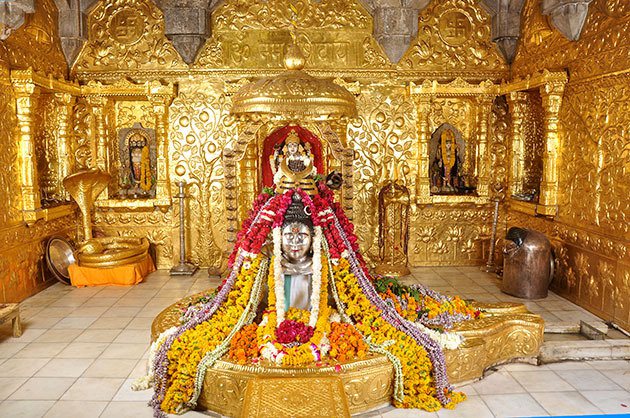
  1. Somnath Temple


Somnath is traditionally considered the first pilgrimage site: the Dwadash Jyotirlinga pilgrimage begins with the Somnath Temple. The temple, that was destroyed and re-built sixteen times, is held in reverence throughout India and is rich in legend, tradition, and history. It is located at Prabhas Patan (Somnath- Veraval) in Saurashtra region of Gujarat state in western India.


2 . Mallikarjuna Temple


Malllikarjuna, also called  Srisaila, is located on a mountain in Kurnool District in Rayalaseema. It enshrines Mallikarjuna in an ancient temple that is architecturally and sculpturally rich. It is a place where Shakti peetha and Jyotirlingam are together. AdiShankara composed his Sivananda Lahiri here.


3. Mahakal Temple


Mahakal, Ujjain (or Avanti) in Madhya Pradesh is home to the Mahakaleshwar Jyotirlinga temple. The Lingam at Mahakal is believed to be Swayambhu, the only one of the 12 Jyotirlingams to be so. It is also the only one facing south and also the temple to have a Shree Yantra perched upside down at the ceiling of the Garbhagriha (where the Shiv Lingam sits). It is a place where Shakti peeta and Jyotirlingam are together.


4. Omkareshwar Temple


Omkareshwar is in Madhya Pradesh on an island in the Narmada River and home to a Jyotirlinga shrine and the Mamaleshwar temple


5. Kedarnath Temple


Kedarnath in Uttarakhand is revered as the northernmost and the closest Jyotirlinga to Lord Shiva's eternal abode of Mount Kailash. Kedarnath forms a part of the smaller Char Dham pilgrimage circuit of Hinduism. Kedarnath, nestled in the snow-clad Himalayas, is an ancient shrine, rich in legend and tradition. It is accessible only for six months a year. It is also one of the Padal Petra Stalam of Vada Naadu mentioned in Thevaaram. Shiva assumed the form of wild boar and dived into the earth at Kedarnath to emerge at Pashupatinath. Pure ghee is applied at Kedarnath lingam as the boar was injured 


6. Bhimashankar Temple


Bhimashankar is very much debated. There is a Bhimashankara temple near Pune (pictured) in Maharashtra, which was referred to as Daakini country, but Kashipur  in Uttarakhand was also referred to as Daakini country in ancient days and a Bhimashkar Temple known as Shree Moteshwar Mahadev is present there. Another Bhimashankar is in the Sahyadri range of Maharashtra. The Bhimashankar temple near Guwahati, Assam is the jyotirlinga according to Sivapuran. According to Linga Purana, Bhimasankar temple in Bhimpur near Gunupur of Rayagada district in South Orissa is also believed as Bhimasankar Jyotirlinga, which is situated at the western part of the holy Mahendragiri mountains and at the river bank of Mahendratanaya(which is also believed as the Daakini area by many historian), was excavated in the year 1974, having quadrangular Shakti around the Linga and decorated by a Upavita as per the puran.


7. The Kashi Vishwanath Temple


The Kashi Vishwanath Temple in Varanasi, Uttar Pradesh is home to the Vishwanath Jyotirlinga shrine, which is perhaps the most sacred of Hindu shrines. It is also one of the Padal Petra Stalam of Vada Naadu mentioned in Thevaaram. 

The temple is situated in Varanasi, the holiest city for Hindus, where a Hindu is expected to make a pilgrimage at least once in his life, and if possible, also pour the remains of cremated ancestors on the River Ganges. The temple stands on the western bank of the holy river Ganges, and is one of the twelve Jyotirlingas. In fact, it is a place where Shakti peeta and Jyotirlingam are together. It is the holiest of all Shiva temples. The main deity is known by the name Vishwanath orVishweshwara meaning Ruler of the universe. The temple town, which claims to be the oldest living city in the world, with 3500 years of documented history, is also called Kashi.


8. Trimbakeshwar Temple


The Trimbakeshwar Temple, near Nasik in Maharashtra, is a Jyotirlinga shrine associated with the origin of the Godavari River. 


9. Baidyanath Temple


Baidyanath Jyotirlinga temple, also known as Baba dham and Baidyanath dham is one of the twelve Jyotirlingas, the most sacred abodes of Shiva. It is located in Deoghar in the Santhal Parganas division of the state of Jharkhand, India. It is a temple complex consisting of the main temple of Baba Baidyanath, where the Jyotirlinga is installed, and 21 other temples.

According to Hindu beliefs, the demon king Ravana worshipped Shiva at the current site of the temple to get the boons that he later used to wreak havoc in the world. Ravana offered his ten heads one after the another to Shiva as a sacrifice. Pleased with this, Shiva descended to cure Ravana who was injured. As he acted as a doctor, he is referred to as Vaidhya ("doctor"). From this aspect of Shiva, the temple derives its name.

10. Nagesh Temple


Nagesh Jyotirlinga is one of the 12 Jyotirlinga shrines mentioned in the Shiva Purana (Satarudra Samhita, Ch.42/2-4, referred as "nagesham darukavane"). Nagesh is believed as the first Jyotirlinga on the earth.

There are three major shrines in India which are believed be Jyotirlinga. the Nageshvara templenear Dwaraka in Gujarat state and the Jageshwar temple near Almora in Uttarakhand state.other Naagnath temple which is believed to be Jyotirlinga 


11. Rameshvaram Temple 


Rameshvaram in Tamil Nadu is home to the vast Ramalingeswarar Jyotirlinga temple and is revered as the southernmost of the twelve Jyotirlinga shrines of India. It enshrines theRameśvara ("Lord of Rama") pillar. It is also one of the Padal Petra Stalam of Pandya                                       Naadumentioned in Thevaaram.   


12. Ghushmeshwar Temple


Ghushmeshwar  Jyotirlinga is one of  the twelfth Jyotirlinga  shrines mentioned in  the Shiva Purana  "kotirudra sahinta",  referred as  ghushmeshwar  jyotirlinga.  Ghushmeshwar is  believed as the last or  twelfth Jyotirlinga on the earth.